
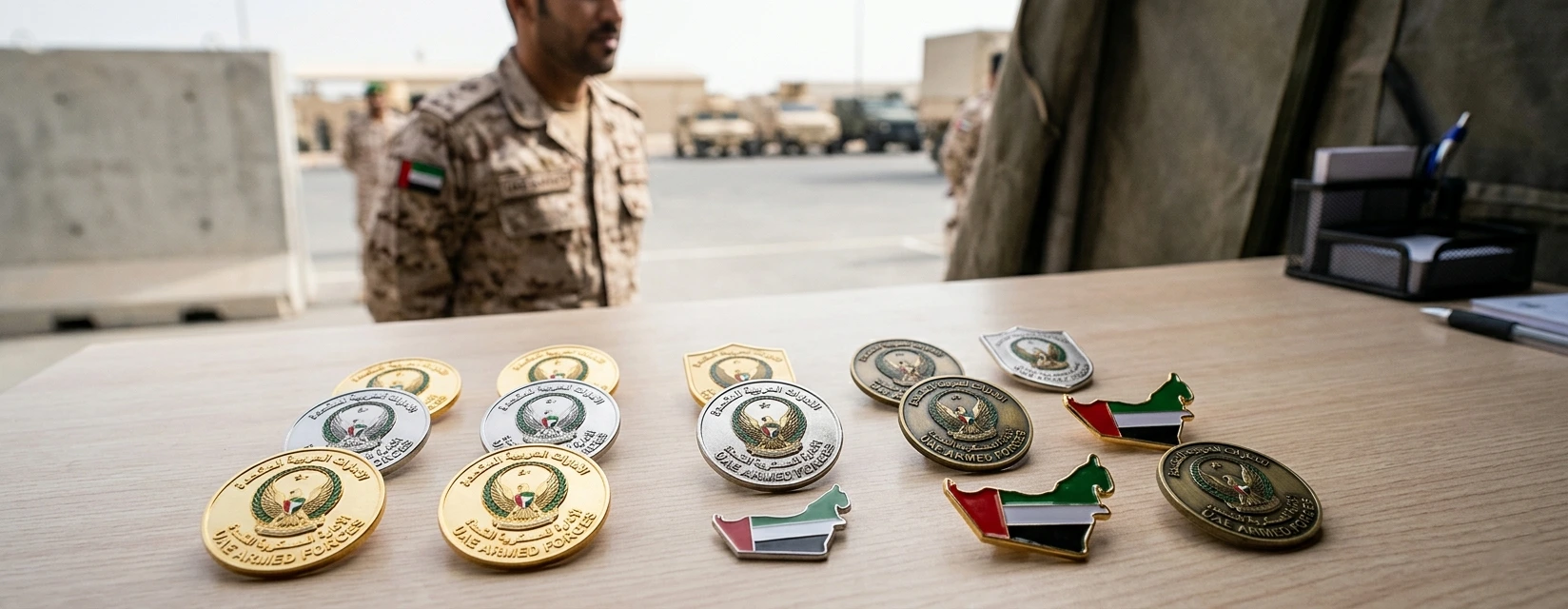
In the military, a pin is never “just” an accessory. It is a symbol of rank, a testament to a hard-won qualification, or a memorial to a fallen comrade. For units, veterans’ organizations, and government agencies, selecting a pins and badges supplier for military personnel requires a level of scrutiny that goes far beyond standard commercial requirements. These items must meet exacting specifications for color, size, and durability, often adhering to strict Institute of Heraldry (TIOH) standards or specific branch uniform regulations.
Whether you are commissioning custom unit insignia for a deployment or sourcing replacement badges for a retirement shadow box, the right supplier serves as a guardian of military tradition and excellence.
Military environments are among the most demanding in the world. Consequently, the hardware worn by service members must be built to withstand “the field” while maintaining a professional “parade-ready” appearance.
Corrosion Resistance: High-quality military badges are typically made from solid brass or bronze base metals. These materials are chosen because they do not rust and can handle exposure to sweat, humidity, and varying climates without degrading.
Hard Enamel (Cloisonné): For color-filled unit pins, hard enamel is the gold standard. The glass-like finish is leveled and polished to the same height as the metal lines, making it scratch-resistant and immune to fading over decades.
Subdued Finishes: For tactical or utility uniforms, suppliers must provide non-reflective, black, or olive drab (OD) finishes that comply with low-visibility requirements.
Suppliers catering to the Army, Navy, Air Force, Marines, Coast Guard, or Space Force must understand the nuances of each branch. This includes:
Correct Heraldry: Every curve of an eagle’s wing or the specific number of stars on a shield carries weight. A minor design error can render a badge unauthorized for uniform wear.
Official Sizing: From full-size breast insignia to 7/16-inch miniature pins for mess dress uniforms, precision is non-negotiable.
The inventory of a specialized military supplier typically falls into four major categories:
| Category | Common Examples | Purpose |
| Rank Insignia | Bars, Chevrons, Oak Leaves, Stars | Denotes authority and pay grade. |
| Qualification Badges | Jump Wings, Combat Infantryman Badge (CIB), Diver Pins | Earned through rigorous training or combat action. |
| Unit & Crest Pins | Distinctive Unit Insignia (DUI), Unit Award Pins | Fosters esprit de corps and identifies specific regiments. |
| Commemorative | Veteran Pins, KIA/MIA Memorial Pins, Deployment Pins | Used for events, reunions, and honoring service history. |
When vetting a supplier for unit-level or personal orders, prioritize these features to ensure the final product meets the “standard of the service”:
Most military units have a vision but may not have a graphic designer on staff. Look for a supplier that offers free professional art services to translate a rough unit patch or a legacy sketch into a production-ready vector file.
In the field, a lost pin is a lost piece of history. A premier supplier should offer a variety of high-retention backing options:
Deluxe Flat-Top Clutches: Provides a more secure grip than standard butterfly clutches.
Threaded Posts and Screw Nuts: Often used for larger badges and hat insignia to ensure they never shift or fall off.
Magnetic Backings: Growing in popularity for veteran attire and civilian suits to prevent damage to fine fabrics.
Small-run capability is vital for specialized detachments or individual replacements, while the ability to scale to thousands of units is necessary for large-scale deployments or change-of-command ceremonies.
For many service members, these pins eventually transition from the uniform to a shadow box. A reputable supplier understands this lifecycle, providing pieces with finishes (like 24k gold plating or oxidized silver) that remain vibrant for generations. When you choose a dedicated military supplier, you aren’t just buying a piece of metal—you are investing in a tangible record of service, bravery, and commitment to duty.
Subscribe to our newsletter for new products, trends and offers.